


Willow Tree Pictures
Welcome to our Willow Tree Pictures gallery
On this page you will find lots of nice pictures of willow trees.
You will find a lot of wonderful facts on willow trees, including information about the willow tree species, planting information, and much more.
This is valuable and useful information that can help you to learn more about the willow tree.
Willow Tree Images
To view each willow tree picture in full size just click on the willow Tree pictures you like.
Enjoy these pictures of Willow Trees.
Willow Trees, Pictures & Images
 |
 |
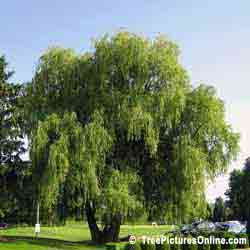
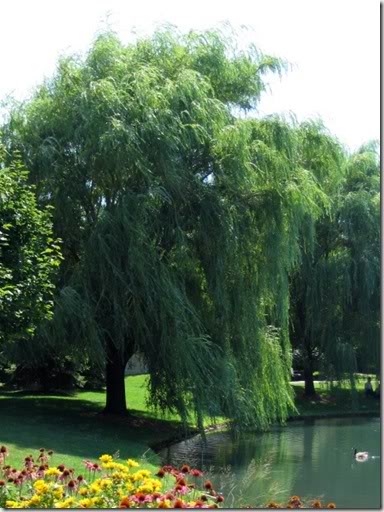
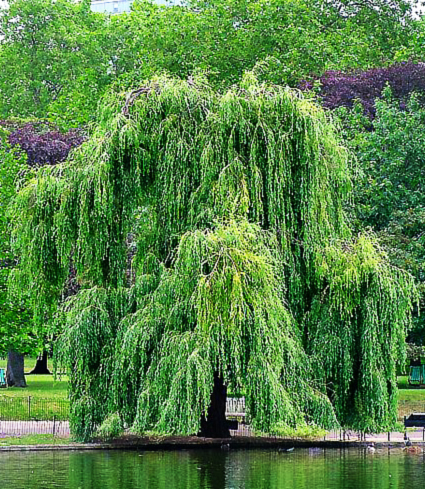
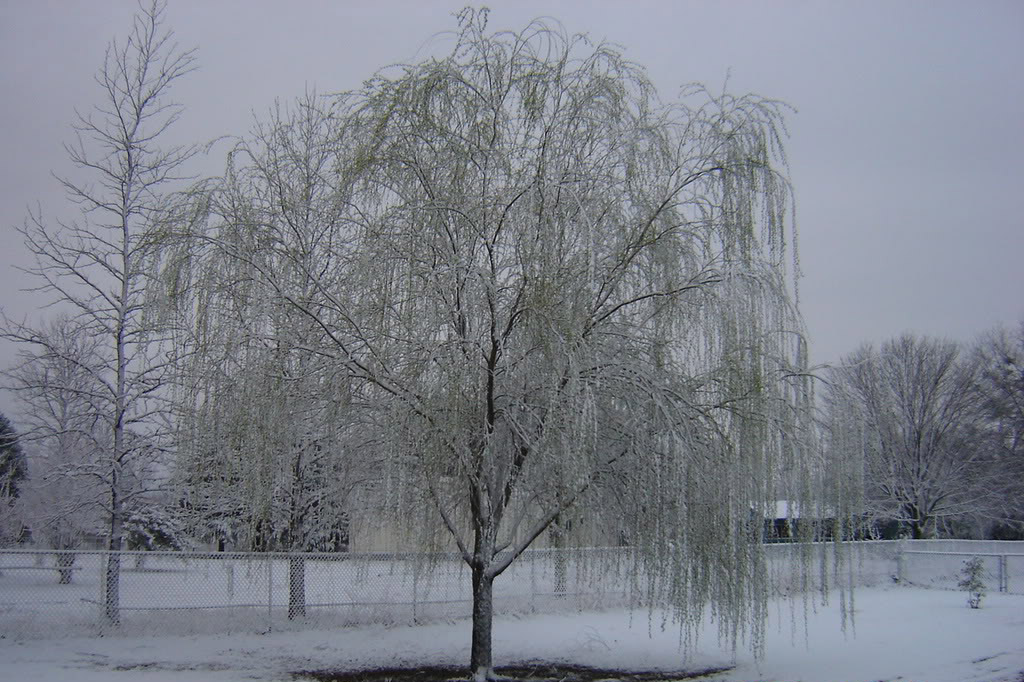
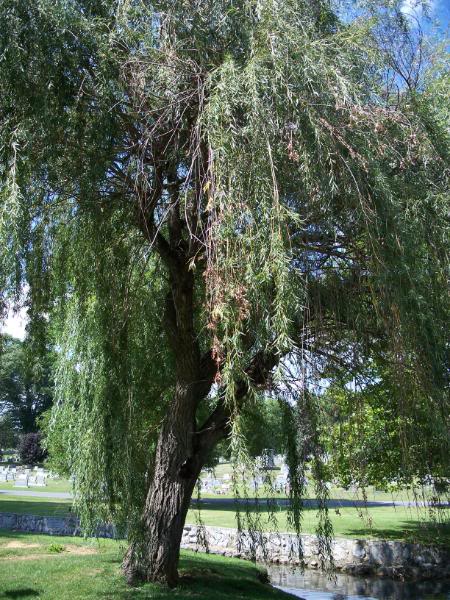
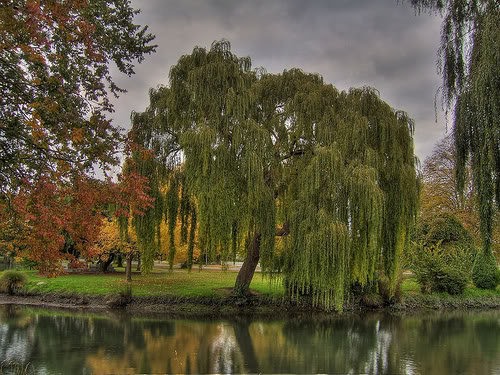
Mature Willow Tree |
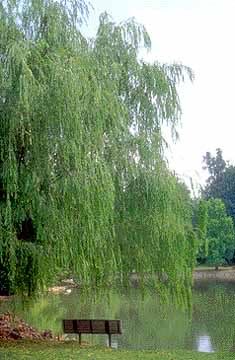
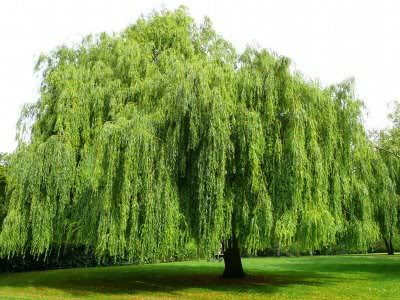
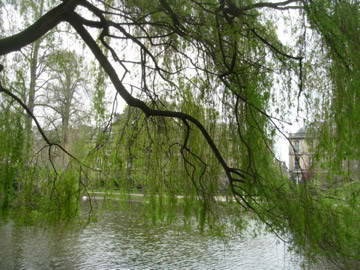
Weeping Willow |
 |
 |
 |
 |
 |
 |
 |
 |
 |
 |
 |
 |
 |
 |
 |
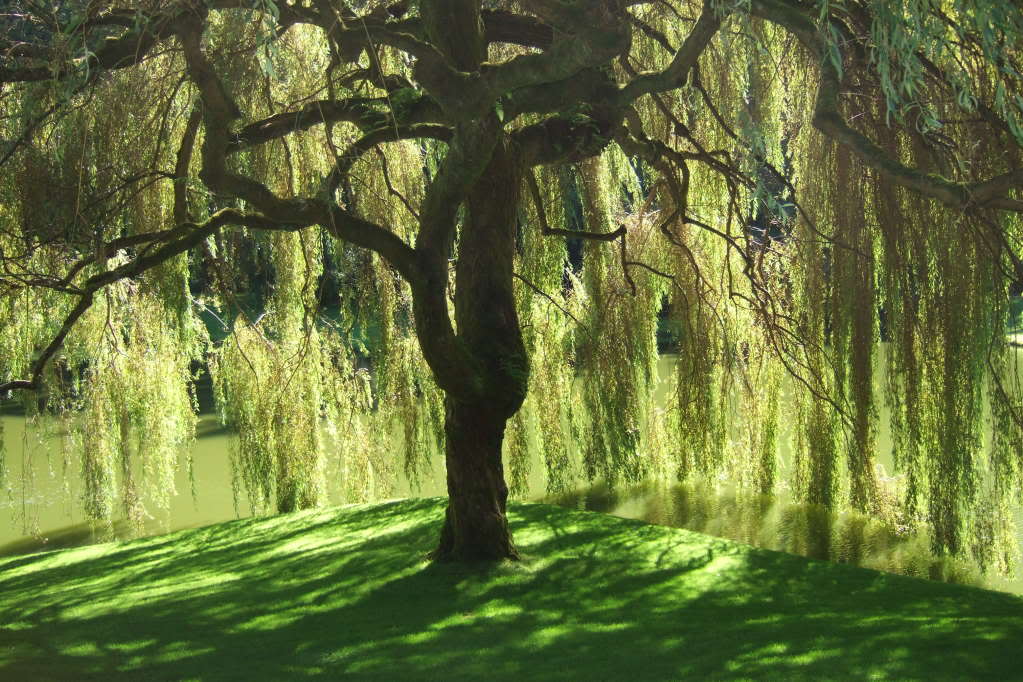


Types of Willow Trees, Different Willow Tree Species
- Bebb Willow Tree
- Corkscrew Willow Tree
- Coyote Willow Tree
- Dappled Willow Tree
- Goat Willow Tree
- Peach Leaf Willow Tree
- Purple Osier Willow Tree
- Pussy Willow Tree
- Scouler's Willow Tree
- Weeping Willow Tree
- White Willow Tree
- Yellow Willow Tree
Willow Tree Species, Facts & Information on Willow Trees
Willows, sallows, and osiers form the genus Salix, around 400 species of deciduous trees and shrubs, found primarily on moist soils in cold and temperate regions of the Northern Hemisphere. Most species are known as willow, but some narrow-leaved shrub species are called osier, and some broader-leaved species are referred to as sallow (from Old English sealh, related to the Latin word salix, willow). Some willows (particularly arctic and alpine species) are low-growing or creeping shrubs; for example the Dwarf Willow (Salix herbacea) rarely exceeds 6 cm (2 in) in height, though spreading widely across the ground.
Willows all have abundant watery bark, sap which is heavily charged with salicylic acid, soft, usually pliant, tough wood, slender branches, and large, fibrous, often stoloniferous roots. The roots are remarkable for their toughness, size, and tenacity to life, and roots readily grow from aerial parts of the plant.
The leaves are typically elongated but may also be round to oval, frequently with a serrated margin. Most species are deciduous; semi-evergreen willows with coriaceous leaves are rare, e.g. Salix micans and S. australior in the eastern Mediterranean. All the buds are lateral; no absolutely terminal bud is ever formed. The buds are covered by a single scale, enclosing at its base two minute opposite buds, alternately arranged, with two small, opposite, scale-like leaves. This first pair soon fall, and the later leaves are alternately arranged.
The leaves are simple, feather-veined, and typically linear-lanceolate. Usually they are serrate, rounded at base, acute or acuminate. The leaf petioles are short, the stipules often very conspicuous, looking like tiny round leaves and sometimes remaining for half the summer. On some species, however, they are small, inconspicuous, and fugacious (soon falling). In color the leaves show a great variety of greens, ranging from yellowish to bluish.
Willows are dioecious with male and female flowers appearing as catkins on different plants; the catkins are produced early in the spring, often before the leaves, or as the new leaves open.
Almost all willows take root very readily from cuttings or where broken branches lie on the ground.
The leaves and bark of the willow tree have been mentioned in ancient texts from Assyria, Sumer and Egypt as a remedy for aches and fever, and the Ancient Greek physician Hippocrates wrote about its medicinal properties in the 5th century BC. Native Americans across the American continent relied on it as a staple of their medical treatments. This is because it contains salicylic acid, the precursor to aspirin.
Some of man's earliest manufactured items may have been made from willow. Basic crafts such as baskets, fish traps, wattle fences and wattle and daub house walls were often woven from osiers (rod-like willow shoots). Thin or split willow rods can be woven into wicker, which also has a long history. The relatively pliable willow is less likely to split while being woven than many other woods, and can be bent around sharp corners in basketry.
Willow wood is also used in the manufacture of boxes, brooms, cricket bats (grown from certain strains of white willow), cradle boards, chairs and other furniture, dolls, flutes, poles, sweat lodges, toys, turnery, tool handles, veneer, wands and whistles.
In addition tannin, fibre, paper, rope and string, can be produced from the wood.
Willow is grown for biomass or biofuel, in energy forestry systems, as a consequence of its high energy in-energy out ratio, large carbon mitigation potential and fast growth.
As a plant, willow is used for biofiltration, constructed wetlands, ecological wastewater treatment systems, hedges, land reclamation, landscaping, phytoremediation, streambank stabilisation (bioengineering), slope stabilisation, soil erosion control, shelterbelt & windbreak, soil building, soil reclamation, tree bog compost toilet, wildlife habitat.
Willow is used as charcoal (for drawing) and in living sculptures. Living sculptures are created from live willow rods planted in the ground and woven into shapes such as domes and tunnels. Willow stems are used to weave baskets and 3 dimensional sculptures such as animals and figures. Willow stems are also used to create garden features such as decorative panel and obelisks.
Willow Tree Trivia
Willow trees produce an abundant, milky sap which contains salicylic acid.
Willow wood is used to make many items including cricket bats, furniture, flutes, whistles and broom handles.
Thank you for visiting our Willow Tree Pictures, please come back soon for some more great tree pictures!

Impressive Tree Pictures
Collection of Impressive Tree Images
Trees: Recent Tree Photos, Pics & Images |
||
 Palm Tree Pictures |
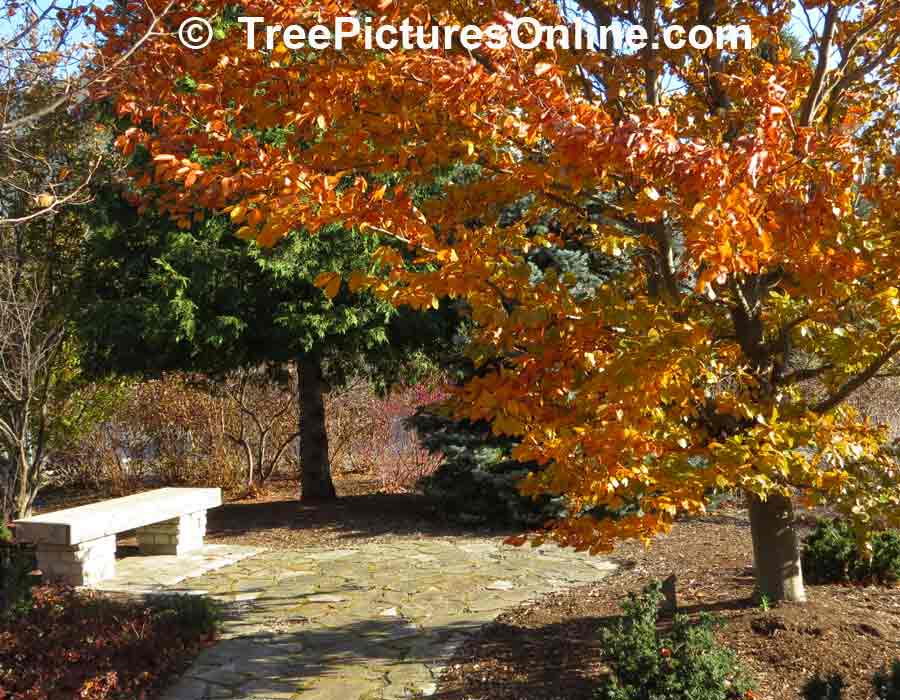 Beech Trees |
 Palm Trees |
 Oak Tree Gallery |
 Christmas Trees |
 Maple Trees |
 Apple Tree Photo Gallery |
 Apple Tree Images |
 Palm Trees Gallery |
 Japanese Maple Trees |
 Pine Tree Gallery |
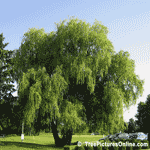 Willow Trees Category |
Tree wallpaper images can make beautiful backgrounds on your computer`s desktop. See our tree wallpaper photographs link in the left tree categories.
Thank you for visiting our Tree Pictures at TreePicture Online.com, please come back soon for more great tree photos!
Pictures Sites
Fireplace Pictures -
Tree Pictures -
Gazebo Pictures -
Symbols & Their Meanings
Resume Samples -
Church Pictures -
Manufactured Home Pictures
Natural Log Siding -
Shadow Puppets -
Caribbean Islands
Play Touch Games -
Waterfall Pictures
Make Hot Pictures - Job Application Forms
