Tree of Heaven Pictures
Tree of Heaven Welcome
Tree of Heaven Pictures Gallery you will find lots of nice pictures of heaven trees.
You will find a lot of wonderful facts on tree of heaven trees, including information about the tree of heaven tree species, planting information, and much more.
This is valuable and useful information that can help you to learn more about the tree of heaven tree.
Tree of Heaven Images
Full size each tree of heaven picture you like, just just click on the tree image to enlarge the Tree of Heaven photo.
Enjoy these pictures of the Tree of Heaven
Tree of Heaven Pictures
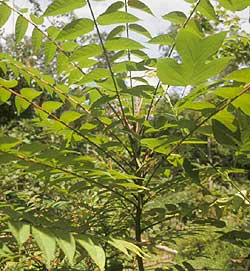
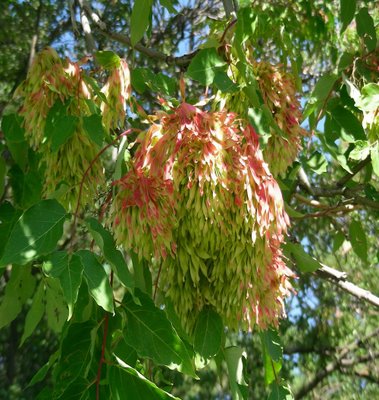
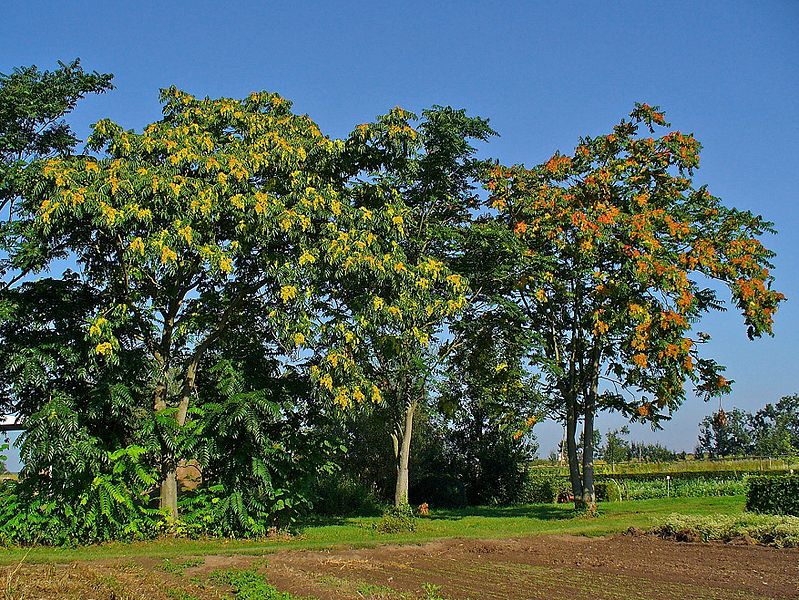
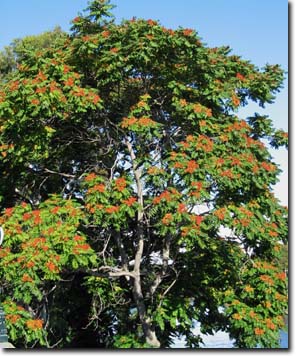
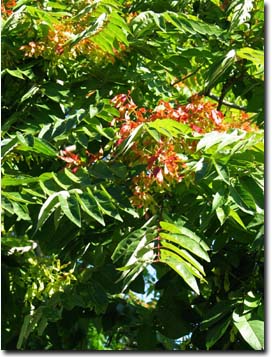
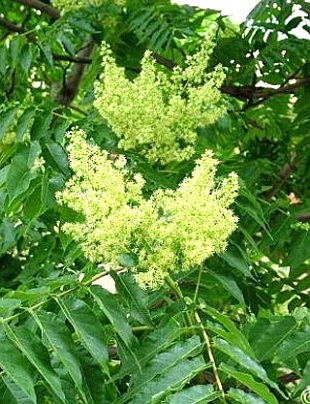
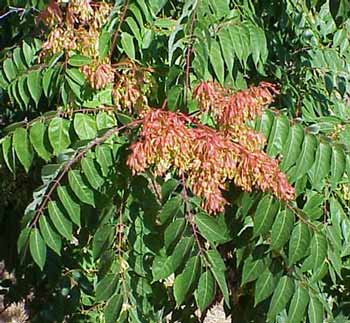
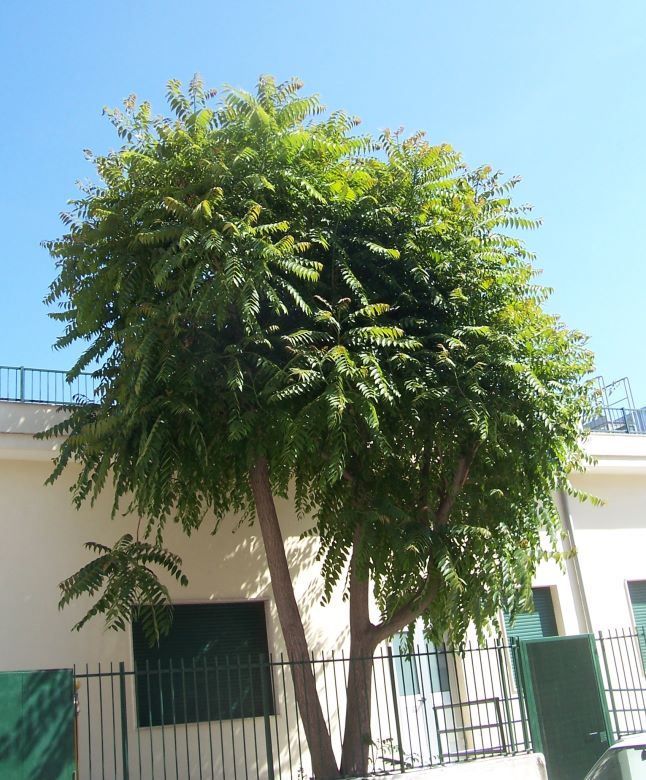
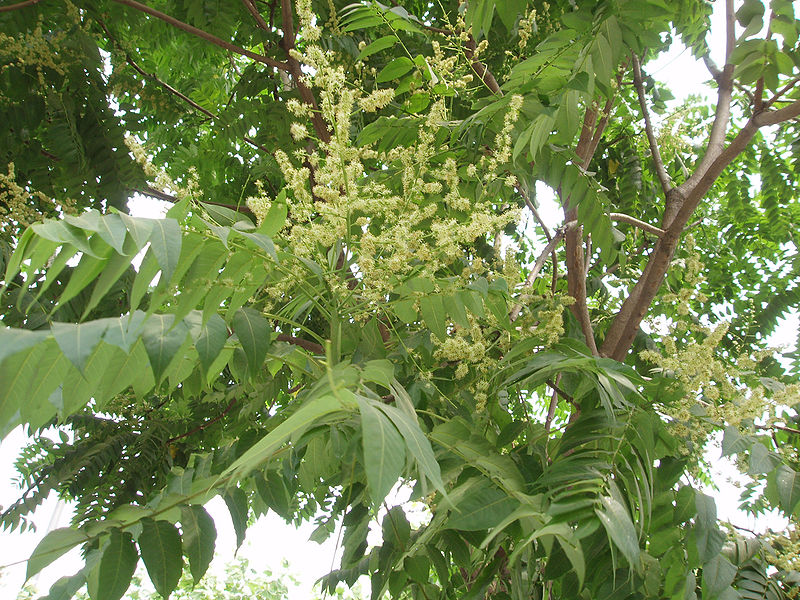
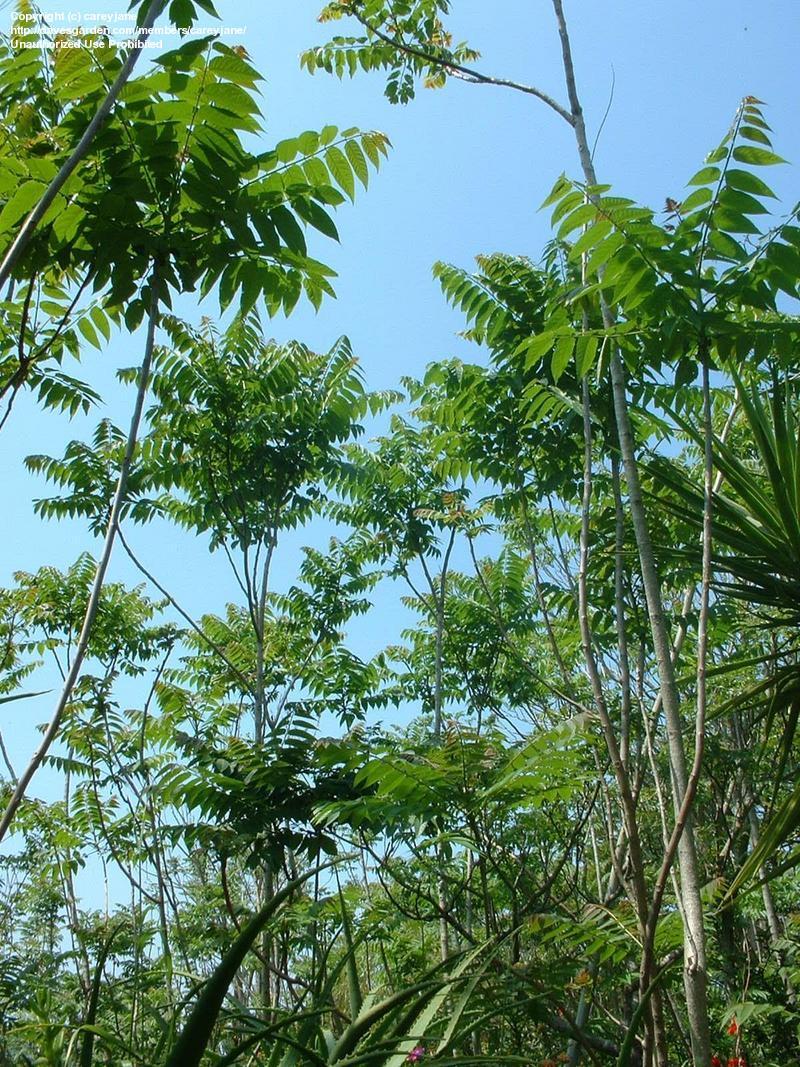
Tree of Heaven Scientific Name: Ailanthus altissima
Common names are Tree of Heaven, Chinese Sumac, Chinese Tree of Heaven, Stinking Ash, Stinktree and Varnishtree.
Tree of Heaven Facts, Info on the Tree of Heaven
Below is some general information on the tree of heaven.
Tree of Heaven, commonly known as, ailanthus, or in Standard Chinese as chouchun, is a deciduous tree in the Simaroubaceae family. It is native to both northeast and central China and Taiwan. Unlike other members of the genus Ailanthus, it is found in temperate climates rather than the tropics. The tree grows rapidly and is capable of reaching heights of 15 metres (49 ft) in 25 years. However, the species is also short lived and rarely lives more than 50 years.
In China, the tree of heaven has a long and rich history. It was mentioned in the oldest extant Chinese dictionary and listed in countless Chinese medical texts for its purported ability to cure ailments ranging from mental illness to baldness. The roots, leaves and bark are still used today in traditional Chinese medicine, primarily as an astringent. The tree has been grown extensively both in China and abroad as a host plant for the ailanthus silkmoth, a moth involved in silk production. Ailanthus has become a part of western culture as well, with the tree serving as the central metaphor and subject matter of the best-selling American novel A Tree Grows in Brooklyn by Betty Smith.
A. altissima is a medium-sized tree that reaches heights between 17 and 27 metres (56 and 90 ft) with a diameter at breast height of about 1 metre (40 in). The bark is smooth and light grey, often becoming somewhat rougher with light tan fissures as the tree ages. The twigs are stout, smooth to lightly pubescent, and reddish or chestnut in colour. They have lenticels as well as heart-shaped leaf scars (i.e. a scar left on the twig after a leaf falls) with many bundle scars (i.e. small marks where the veins of the leaf once connected to the tree) around the edges.
The buds are finely pubescent, dome shaped, and partially hidden behind the petiole, though they are completely visible in the dormant season at the sinuses of the leaf scars. The branches are light to dark gray in colour, smooth, lustrous, and containing raised lenticels that become fissures with age. The ends of the branches become pendulous. All parts of the plant have a distinguishing strong odour that is often likened to rotting peanuts or cashews.
The leaves are large, odd or even-pinnately compound, and arranged alternately on the stem. They range in size from 30 to 90 cm (0.98 to 3.0 ft) in length and contain 10 to 41 leaflets organised in pairs, with the largest leaves found on vigorous young sprouts. The rachis is light to reddish-green with a swollen base. The leaflets are ovate-lanceolate with entire margins, somewhat asymmetric and occasionally not directly opposite to each others. Each leaflet is 5 to 18 cm (2.0 to 7.1 in) long and 2.5 to 5 cm (0.98 to 2.0 in) wide.
The flowers are small and appear in large panicles up to 50 cm (20 in) in length at the end of new shoots. The individual flowers are yellowish green to reddish in colour, each with five petals and sepals.
The first scientific descriptions of the tree of heaven were made shortly after it was introduced to Europe by the French Jesuit Pierre Nicholas d'Incarville.
A. altissima is native to northern and central China, Taiwan and northern Korea.
The tree prefers moist and loamy soils, but is adaptable to a very wide range of soil conditions and pH values. It is drought-hardy, but not tolerant of flooding. It also does not tolerate deep shade.
The earliest introductions of A. altissima to countries outside of its native range were to the southern areas of Korea as well as to Japan. It is possible that the tree is native to these areas, but it is generally agreed that the tree was a very early introduction.
Ailanthus is an opportunistic plant that thrives in full sun and disturbed areas. It spreads aggressively both by seeds and vegetatively by root sprouts, re-sprouting rapidly after being cut. It is considered a shade-intolerant tree and cannot compete in low-light situations, though it is sometimes found competing with hardwoods, but such competition rather indicates it was present at the time the stand was established.
On the other hand, a study in an old-growth hemlock-hardwood forest in New York found that Ailanthus was capable of competing successfully with native trees in canopy gaps where only 2 to 15% of full sun was available.
The same study characterised the tree as using a "gap-obligate" strategy in order to reach the forest canopy, meaning it grows rapidly during a very short period rather than growing slowly over a long period. It is a short lived tree in any location and rarely lives more than 50 years. Ailanthus is among the most pollution-tolerant of tree species, including sulfur dioxide, which it absorbs in its leaves. It can withstand cement dust and fumes from coal tar operations, as well as resist ozone exposure relatively well. Furthermore, high concentrations of mercury have been found built up in tissues of the plant.
In addition to its use as an ornamental plant, the tree of heaven is also used for its wood, medicinal properties, and as a host plant to feed silkworms of the moth Samia cynthia, which produces silk that is stronger and cheaper than mulberry silk, although with inferior gloss and texture. It is also unable to take dye. This type of silk is known under various names: "pongee", "eri silk" and "Shantung silk", the last name being derived from Shandong Province in China where this silk is often produced. Its production is particularly well known in the Yantai region of that province. The moth has also been introduced in the United States.
The pale yellow, close-grained and satiny wood of ailanthus has been used in cabinet work. It is flexible and well suited to the manufacture of kitchen steamers, which are important in Chinese cuisine for cooking mantou, pastries and rice.
Tree of Heaven Comments
Tree of Heaven is considered an invasive tree species. New tree growth is fast growing by suckering and compounded by the fact that the Tree of Heaven has light seeds which blow readily in wind away from the tree.
Tree of Heaven has also be referred to as "stinking ash" due to it's unpleasant odor given off when the leaf glands are rubbed.
Tree of Heaven is a fast growing invasive plant species that can overrun native vegetation.
Thank you for visiting Tree of Heaven Pictures at TreePicturesOnline.com, please come back soon for more great tree pictures!

Pictures Sites
Fireplace Pictures -
Tree Pictures -
Gazebo Pictures -
Symbols & Their Meanings
Resume Samples -
Church Pictures -
Manufactured Home Pictures
Natural Log Siding -
Shadow Puppets -
Caribbean Islands
Play Touch Games -
Waterfall Pictures
Make Hot Pictures - Job Application Forms